Moving to Dubai isn't just about finding a villa in Jumeirah or an apartment at the Marina. The real challenge is decoding the school "market." With an elite school occupancy rate approaching 94%, you need to know what you're buying. Here's our field analysis of the best options for your children.
1. The Rigorous Choice: The AEFE Network
Lycee Francais International Georges Pompidou (LFI GP)
Founded in 1972, the LFI Georges Pompidou is the oldest French institution in Dubai. Directly managed by the AEFE (Agency for French Education Abroad), it now serves over 2,700 students across three campuses: Academic City (the main one, housing the high school), Oud Metha (kindergarten and primary, in the historic heart of the city), and Sharjah. It remains the reference institution for French expat families in the Emirates.
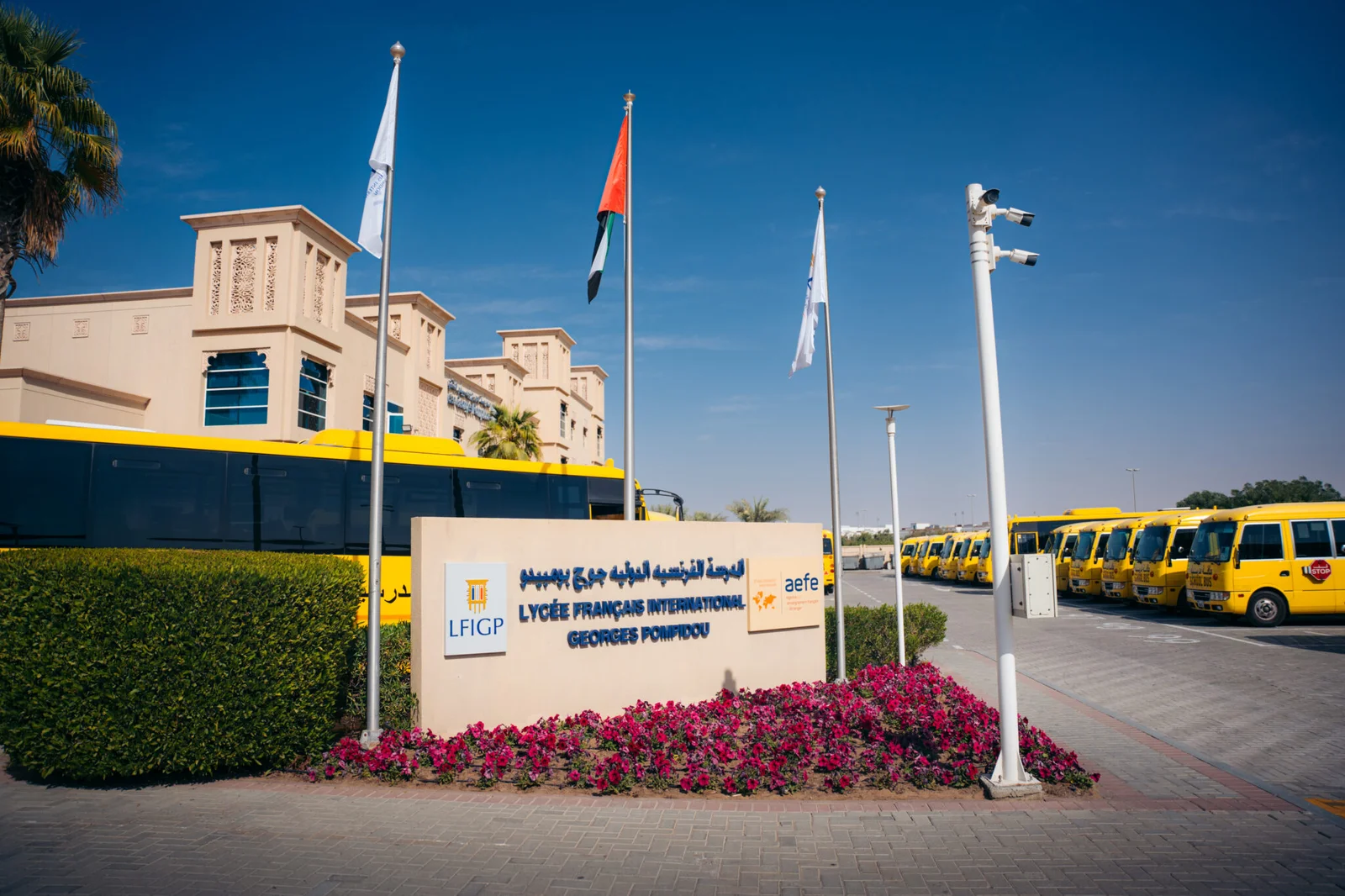
LFI GP -- Academic City, Oud Metha & Sharjah
The technical secret
Don't be fooled by the "classic" look of the Academic City campus. Head straight to Wing C. Fully renovated for the 2025 school year, it houses physics and chemistry labs that put many French university facilities to shame. Each pair of students gets Bluetooth-enabled computer-assisted experimentation (ExAO) equipment -- a standard you normally only find in Master's research programs.
The insider stat: 100% Bac pass rate, but more importantly, 42% "Tres Bien" (highest honours) in 2025. It's a factory for elite preparatory school applications.
A word on timing. At LFI GP, enrollment applications for the following September open as early as October. For sought-after IB schools like DIA, expect 12 to 18 months on the waitlist. I've seen families show up in March for a September start — the best spots were long gone.
Lycee Libanais Francophone Prive (LLFP) — Meydan
Originally founded in Beirut in 1967, the LLFP opened its Dubai campus in Meydan, in the Nad Al Sheba district. An AEFE partner school, it offers a full French curriculum from kindergarten through to the final year. Less well-known than the Pompidou, it has attracted a diverse francophone community (Lebanese, French, African) and invested heavily in its infrastructure in recent years.
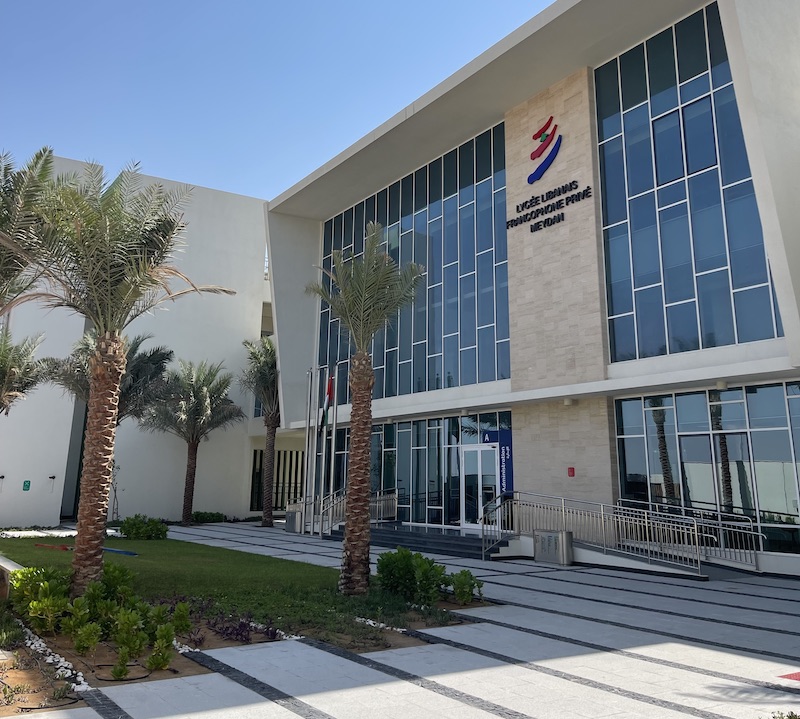
LLFP Meydan
The killer detail
Its 500-seat auditorium has concert-hall acoustics. But for the science-minded, it's their robotics hub (equipped with articulated arms and industrial 3D printers) that impresses -- starting from middle school.
The climate: A 92% teacher retention rate, extremely rare in Dubai, ensuring pedagogical stability over multiple years.
2. Global Immersion: The IB Programme
Dubai International Academy (DIA) — Emirates Hills
Founded in 2005 in the heart of the Emirates Hills residential district, DIA is part of the Innoventures Education group. It is one of the few IB schools in Dubai to offer all three programmes of the continuum: PYP (primary), MYP (middle years), and DP (Diploma Programme). With around 1,800 students from over 80 nationalities, it has established itself as the IB reference for international families in "new Dubai."
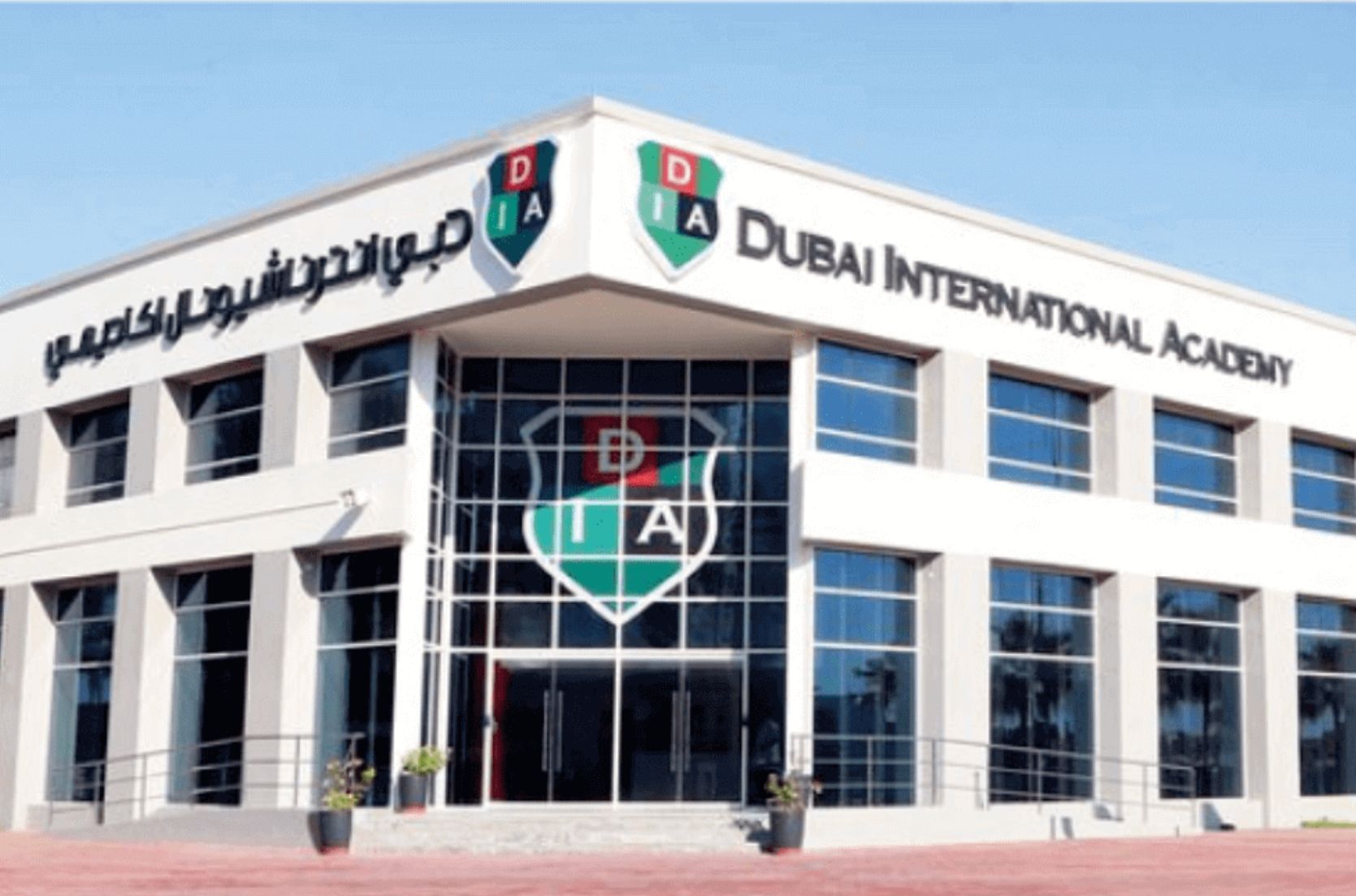
DIA Emirates Hills
The technical secret
Their "Senior Lounge" operates like a start-up incubator. This is where students prepare for the IB Diploma with dedicated guidance counsellors (ratio of 1 counsellor per 45 students).
The performance: A consistent average of 37 IB points, which opens doors to the London School of Economics (LSE) or Oxford.
GEMS World Academy (GWA)
Opened in 2008 in Al Barsha South, GEMS World Academy is the flagship of the GEMS Education group, the world's largest private school operator. Positioned in the ultra-premium segment (among the highest tuition fees in Dubai), it serves around 1,200 students in a futuristic campus. It is the most "technological" IB school in the emirate.
GEMS World Academy Dubai
The killer detail
Its 70-seat digital planetarium. This is not a gimmick: it's integrated into the physics curriculum to simulate space launches and real-time orbital calculations.
Tuition fees: what it actually costs
Nobody talks about this openly, so here are the real ranges:
| School | System | Annual fees (AED) | ≈ EUR |
|---|---|---|---|
| LFI GP (Pompidou) | AEFE | 18,000 – 28,000 | €4,500 – 7,000 |
| LLFP Meydan | AEFE Partner | 22,000 – 32,000 | €5,500 – 8,000 |
| DIA Emirates Hills | IB | 55,000 – 95,000 | €13,500 – 23,500 |
| GEMS World Academy | IB Premium | 80,000 – 110,000 | €20,000 – 27,000 |
The gap is massive. And more expensive doesn't mean better for your child. The Pompidou at 25,000 AED produces application files that rival any 100,000 AED IB school — if you know how to position the application correctly.
Unsure which option is right for your family? Let's discuss it.
3 traps families discover too late
- Hidden fees. Published tuition is just the starting point. School transport, uniforms, mandatory extracurriculars, school trips, external exams (Cambridge, DELF)… At DIA or GEMS, the real bill can exceed the listed price by 20 to 30%. Always ask for the "total cost of attendance."
- Silent waitlists. Some schools accept your application without telling you you're on a waitlist. You receive a polite "we'll be in touch" in February, then radio silence until June. Meanwhile, spots at other schools fill up. Result: you no longer have a plan B.
- The "we'll figure it out later" trap. Many families pick a school for primary thinking they'll adjust at middle school. But a child schooled for 4 years in the British or IB system no longer has the written French level to enter the AEFE track in Grade 6. The transition that seemed straightforward becomes a wall.
This is precisely the kind of situation we anticipate in our strategic guidance process.
What we see on the ground
A family reached out to us in January. Their 14-year-old son was arriving from Singapore. Waitlisted at LFI GP, rejected by DIA — application filed too late. We prepared an urgent application for LLFP and secured a fast-tracked interview. He started in September.
Another case we see often: the father wants IB "because it's international," the mother wants the French track "just in case we go back." Their daughter is in Grade 8, they're planning three years in Dubai. We ask the one question that matters: "Are you returning to France afterwards?" Yes, probably. The BFI at Pompidou becomes the obvious choice. Two years later, she's in Grade 10 BFI with a 16/20 average.
BFI vs IB: don't make the wrong choice
This is where most families make a critical mistake. The common assumption: "My child wants to study internationally, so they need the IB." This is wrong.
What parents don't always see: the choice made in Grade 6 in Dubai determines the options available in the final year — and therefore which universities are within reach. You're not choosing a school for the next 3 years. You're laying the foundation of an application for Stanford, EPFL, or Sciences Po in 5 or 6 years. We break down this impact in our full BFI vs IB analysis for university admissions.
The BFI (Baccalaureat Francais International) is classified as "Most Demanding" by American admissions officers. It sends a signal of rigour that the IB doesn't match. But it's not the right option for everyone either — it depends on your situation:
- The length of your expatriation — 2 years and 6 years are not the same strategy
- Post-graduation plans — and these often shift along the way
- Maths, English and written French level — this is often where difficulties emerge
- Age at the time of the switch — a transition in Grade 6 and in Grade 10 carry very different consequences
- Likelihood of returning to France — the factor families realise too late (see our guide on orientation mistakes when returning from abroad)
Let's find the best option together
Every family has a different equation. We analyse your situation and your goals to help your child secure the best schools, both now and for university. The wrong curriculum choice today means closed doors tomorrow.